




Received a suspicious text? Here's how to stay safe
SMS scams continue to be one of the most common methods used by fraudsters. These messages can appear genuine and often create a sense of urgency, encouraging people to act quickly without stopping to verify whether the communication is legitimate.
That's why it's important to stay alert and know what to look for.
A new step in the fight against SMS scams
From 1 July 2026, the Australian Government introduced a new measure to help combat SMS impersonation scams in Australia.
Businesses that send SMS messages using a named sender ID (also known as an alpha tag) can now register that sender ID. This helps telecommunications providers identify legitimate organisations and makes it harder for scammers to impersonate trusted brands.
CareSuper has registered its SMS sender ID as part of these changes.
As the new system continues to roll out, some telecommunications providers may label messages sent using unregistered sender IDs as ‘Unverified’. If you receive a message claiming to be from a trusted organisation that carries an ‘Unverified’ label, do not respond, click any links or share any personal information.
While scammers will continue to adapt their tactics, these changes make it harder for them to impersonate legitimate organisations and easier for you to identify potentially suspicious messages.
How to spot a suspicious SMS
Scam messages often:
- create a sense of urgency and ask you to act immediately
- claim there's a problem with your account or payment
- ask you to click a link to verify information
- request personal details, passwords or authentication codes
- contain links to unfamiliar websites.
If something doesn't seem right, trust your instincts and take the time to verify the communication through another channel – either calling the sender yourself or checking their website independently.
What we will and won't do
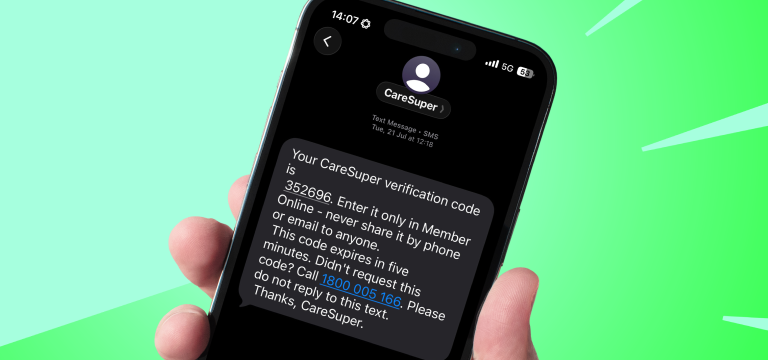
CareSuper will always send SMS messages from ’CareSuper’.
We will never ask you to provide your password, authentication codes or Member Online login details by SMS.
If you're ever unsure whether a message is genuine, don't click any links or reply to the message. Instead, contact us directly using the details on our website or log in to Member Online to check your account.
Simple ways to help protect yourself
While technology plays an important role in preventing fraud, there are also steps you can take to help protect your account:
- regularly check your account balance and transactions
- use strong, unique passwords for your online accounts
- enable multi-factor authentication where available
- never share authentication codes or passwords with anyone
- be cautious of unexpected texts, emails or phone calls
- verify requests for personal information before responding
- contact us if you're unsure whether a communication is genuine.
Think you've been targeted?
If you think you may have been targeted by a scam, contact us as soon as possible. You can call us on 1800 005 166 or email [email protected]. We’re here to help.